The planted tanks people fall in love with online — misty carpets, mountains of stone, not a cable in sight — are usually competition scapes: run by experienced keepers, trimmed weekly, and sometimes not housing fish at all. They are beautiful, and they are a misleading place to start, in the same way a show garden is a misleading model for a first allotment.
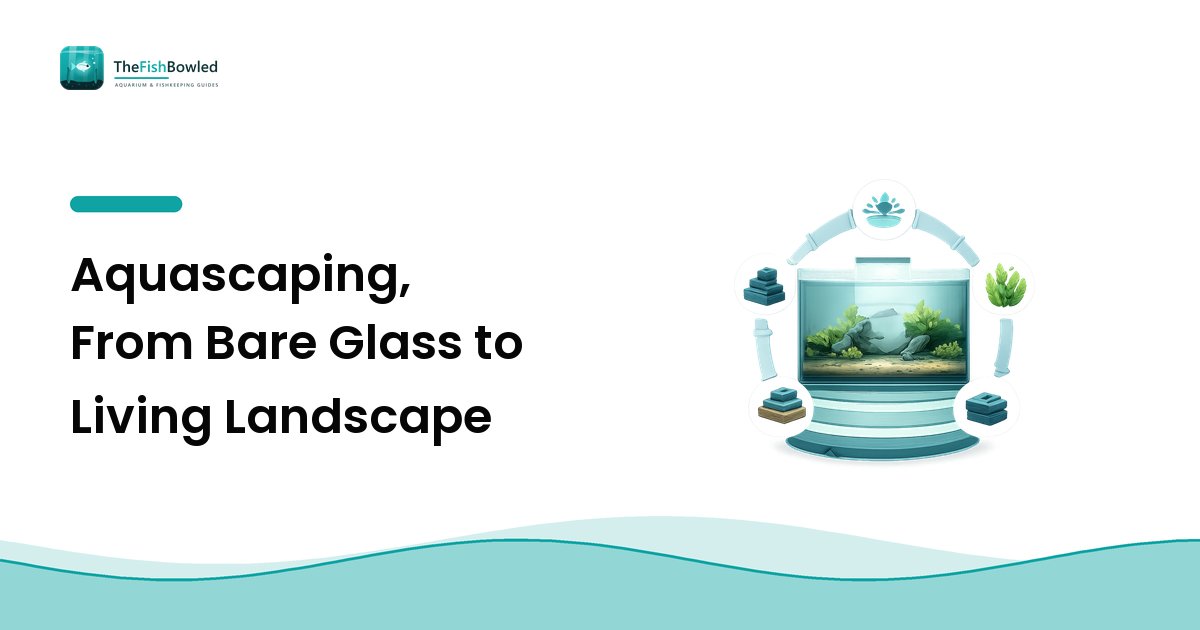
Here is the reassuring truth underneath them: an aquascape is a system of four layers — substrate, hardscape, plants, and light — and if you build the layers in order and let them balance each other, a genuinely beautiful tank follows almost by itself. You do not need injected CO2, rare plants, or an artist's eye to get there. You need the layers in the right order and a little patience while they knit together.
One principle sits above all of it: the scape is your fish's entire world, not a backdrop for it. Open water to swim, cover to retreat into, and stable water come first. A layout that wins photographs but stresses its inhabitants has failed at the actual job.
Substrate: the foundation everything feeds on
Substrate is the first layer in and the hardest to change later, so it deserves the most thought.
The practical choice is between two families:
- Inert substrates — sand and fine gravel — do not alter your water or feed plants on their own. They are inexpensive, permanent, and a fine home for hardy plants that feed mostly from the water, especially with root-food tablets pushed in near heavy feeders.
- Nutrient-rich aquasoils are made for planted tanks: they feed roots for a year or more and soften water slightly, which most plants appreciate. The trade-offs are cost, a limited lifespan before they break down, and a tendency to cloud the water if handled roughly.
For a first serious scape, either works — the choice matters less than the shape. Slope the substrate deeper at the back and thinner at the front. It looks natural, gives background plants root room where they need it, and makes the tank feel deeper than it is.
Hardscape: the skeleton of the layout
Wood and rock give a scape its structure — they are what makes a tank look like a landscape rather than a collection of plants. Two things matter more than aesthetics when choosing them:
Hardscape changes water. Driftwood releases tannins that tint water amber and nudge it softer and more acidic — harmless, often beneficial, and a look some keepers pursue deliberately. Some rocks, particularly pale calcium-rich types, slowly raise hardness and pH. Neither is wrong; both belong in the plan, matched to the fish you intend to keep.
Hardscape must be stable. Rock stacks settle, wood floats until it saturates, and burrowing fish undermine anything balanced. Set stone directly on the glass or deep in the substrate — not perched on top of it — and weigh or wedge wood until it stays down on its own.
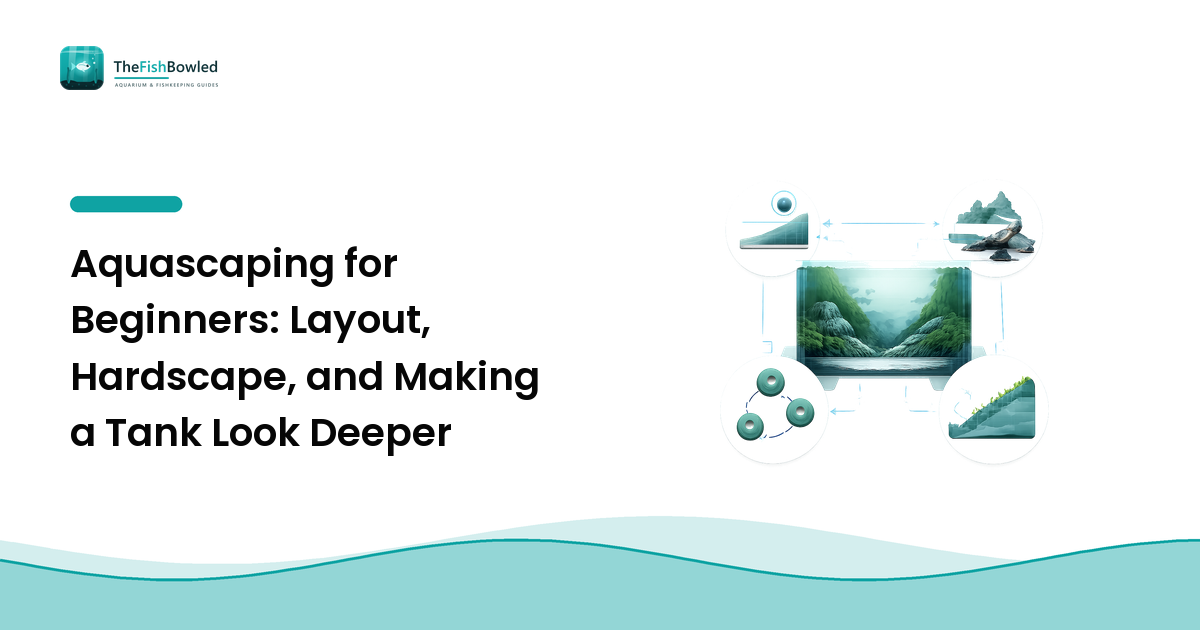
Where the pieces should actually go — focal points, the odd-numbers habit, slopes that create depth, and keeping the swimming space open as part of the design — is a craft of its own, and our guide to aquascaping layout for beginners walks through it placement by placement. The pillar-level rule is simpler: build the entire skeleton before a single plant goes in, and view it from the chair you will actually sit in.
Plants: the layer that does the real work
Plants are usually treated as decoration. In a scaped tank they are closer to equipment: they absorb the nitrogen compounds your filter's bacteria produce, compete directly with algae for nutrients, oxygenate the water by day, and give shy fish the cover that makes them behave naturally. A well-planted tank is measurably easier to keep stable than a bare one — that, more than looks, is the argument for live plants.
Think in three zones matched to plant height: low growers at the front where they will not block the view, bushier mid-ground species around the hardscape, and tall stems or grasses at the back to hide the hardware. Fast-growing stem plants earn a special mention in a new scape — they are the nutrient sponges that carry the tank through its unstable early weeks, and they can always be swapped out later as slower plants establish.
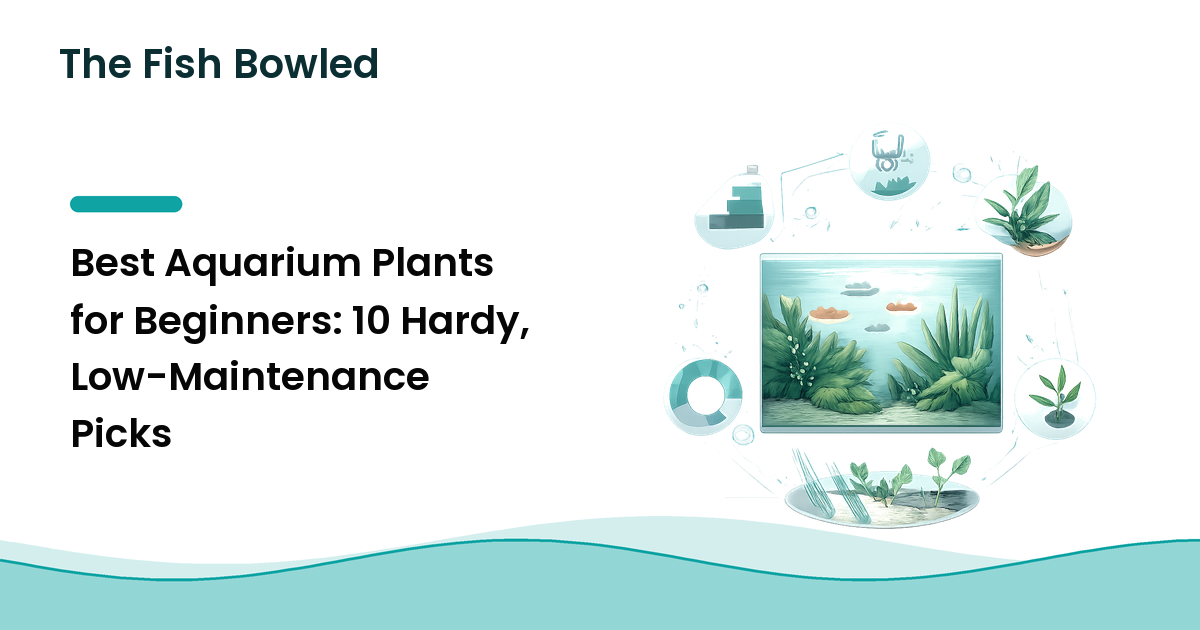
You do not need difficult species to fill all three zones. There is a deep bench of forgiving plants that thrive in ordinary light without CO2 injection, and our guide to the best aquarium plants for beginners profiles ten of them, zone by zone, with planting and care notes for each.
Light: the throttle on the whole system
Light is the least visible layer and the one that controls all the others. Every hour of light drives photosynthesis in whatever can use it — and in a tank, that is your plants and algae, in open competition.
That framing answers most lighting questions:
- Duration: somewhere around six to eight hours a day suits most planted tanks — enough for plants to grow, not so much that algae feasts on the surplus. A cheap plug-in timer makes it consistent, and consistency matters more than the exact number.
- Intensity: match the light to the plants you actually chose, not the brightest fixture on the shelf. Easy low-light plants under intense lighting cannot use what they are given; the leftover energy goes straight to algae.
- Placement: direct sunlight on a tank is uncontrolled extra light. It is the quiet cause of a remarkable share of green-water problems.
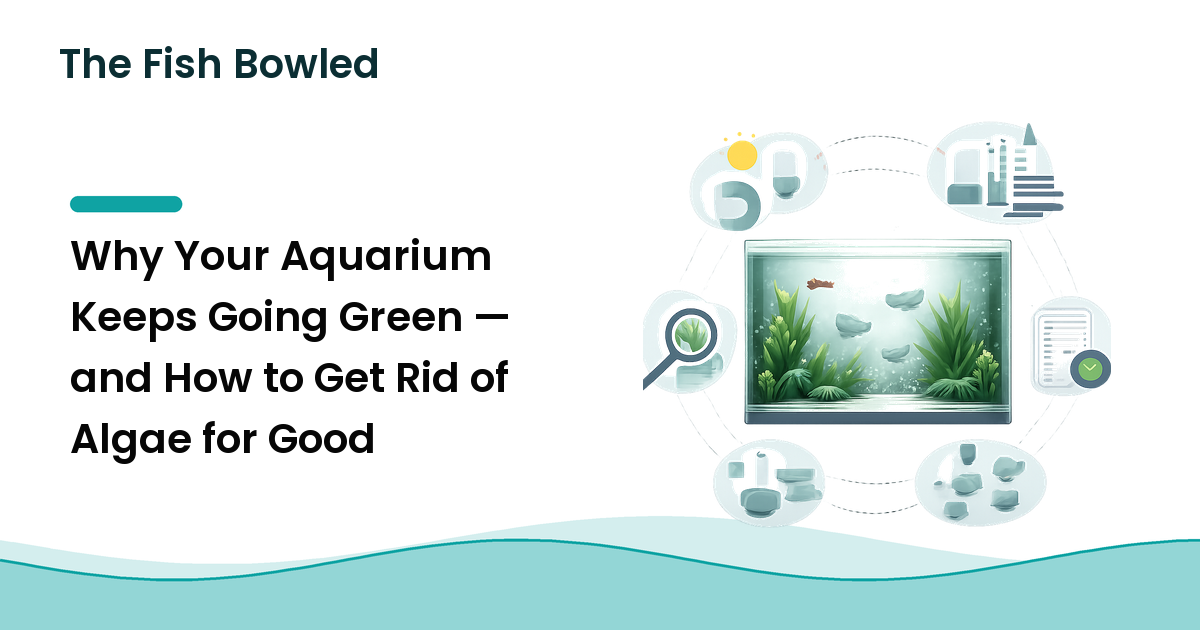
If the tank does turn green or fuzzy, treat it as information rather than failure: algae is the system telling you light or nutrients are outrunning the plants. The diagnosis and the lasting fix — rebalancing, not scrubbing — are covered in why your aquarium keeps going green.
Water and livestock: the scape is still an aquarium
A beautiful layout does not exempt a tank from biology. A newly scaped tank must cycle before fish arrive — the weeks in which the bacteria that process fish waste establish themselves — exactly as any new tank must, and the full sequence is in our aquarium setup guide. Aquasoils add one wrinkle: many release ammonia generously in their first weeks, which is free fuel for the cycle but a firm reason not to shortcut it.
Stock the finished scape with the layout in mind: fish that swim the open middle water show off the depth you built, bottom-dwellers appreciate the sand foreground, and a clean-up crew earns its keep among the plants. Cherry shrimp are the classic planted-tank crew — busy, algae-grazing, and fascinating in their own right — and if they appeal, our cherry shrimp tank walkthrough covers the parameters and acclimation they need. Whatever you choose, welfare rules stand: the tank's size and water suit the fish, never the reverse.
The part nobody photographs: growing in
A freshly planted scape looks sparse, and the weeks that follow are untidy — plants melt back before they root, water may haze, and some algae usually visits while the system finds its balance. This is the normal adolescence of every planted tank, including the award winners.
The routine through it is modest: regular partial water changes, remove leaves that are clearly dead, top up fast growers where gaps appear, and resist the urge to rearrange — every uprooting sets the clock back. Trim stem plants when they hit the surface and replant the healthy tops; carpets and crypts spread on their own schedule, not yours.
Somewhere around the second or third month, the scape stops looking planted and starts looking grown. That transition — not the day-one photograph — is the actual reward of the hobby.
FAQ
Do I need CO2 injection to aquascape? No. CO2 accelerates growth and unlocks demanding species, but a substantial share of beautiful scapes run without it — hardy plants, moderate light, and patience. Treat CO2 as an upgrade for later, not an entry requirement.
Can I aquascape a tank that already has fish in it? Yes, in stages. Add hardscape and plants a portion at a time, avoid stirring deep substrate in a mature tank, and keep the filter running throughout. What you cannot safely do is tear the whole tank down and rebuild it in an afternoon with the fish waiting in a bucket.
Why are my new plants dying? Early melt is usually transition, not death — many plants are grown out of water at the farm and shed those leaves as they adapt. Plant them properly, leave the roots alone, and most regrow within weeks. Persistent decline afterwards points to light or nutrient shortfalls.
How long should the light be on in a planted tank? Six to eight hours on a timer is a sound starting range for most setups. Extend gradually only if plants clearly want more; shorten it if algae is winning. Consistency from the timer matters more than the precise figure.
What is the easiest aquascaping style for a first attempt? A simple nature-style layout — one wood or rock focal point, sloped substrate, and forgiving plants in three height zones — is far more forgiving than carpets-and-stone minimalism, which shows every flaw and often depends on CO2.
Build the layers in order, choose plants before you choose a light, and let the fish's needs draw the boundaries of the design. Then give it time — the tank does the finishing work itself. For more calm, welfare-first fishkeeping guides, visit The Fish Bowled.