A new aquarium is exciting, and it is tempting to fill it with water and fish the same afternoon. The single biggest favor you can do your future fish is to slow down. A tank set up patiently — built, cycled, and tested before any fish arrive — is far easier to keep healthy than one rushed into service. This guide walks you through it calmly, step by step.
The short version: pick a tank that is bigger than you think you need, add a filter, heater, and light, fill and dechlorinate the water, then spend a few weeks cycling it so the biological filter is ready. Only after that do the fish move in.
Why setup and patience matter
Fish live in their water the way you live in air. Everything they excrete stays in the tank until your filter and water changes remove it. Ammonia from waste is toxic, and a brand-new tank has no bacteria to process it. Cycling builds that bacterial colony first, so your fish never swim in poison. Skipping this step is the most common reason beginner fish die, and it is completely avoidable.
Step 1: Choose the right tank
Bigger is genuinely easier for a beginner. A larger volume of water dilutes mistakes and keeps temperature and chemistry stable, while a tiny tank swings fast and punishes small errors.
- Aim for 20 gallons (about 75 liters) or more if you have the space. It is far more forgiving than a 5-gallon nano.
- Avoid bowls. They are too small to filter or heat properly and are not a humane home for fish like bettas, despite the marketing.
- Pick a spot first — a sturdy, level surface away from direct sun and drafts, near an outlet. A full tank is heavy, so the stand matters.
The reason to favor size is stability: more water means slower, gentler swings in the conditions your fish depend on.
Step 2: Add the core equipment
A healthy tank needs only a few essentials. Buy these before you buy fish.
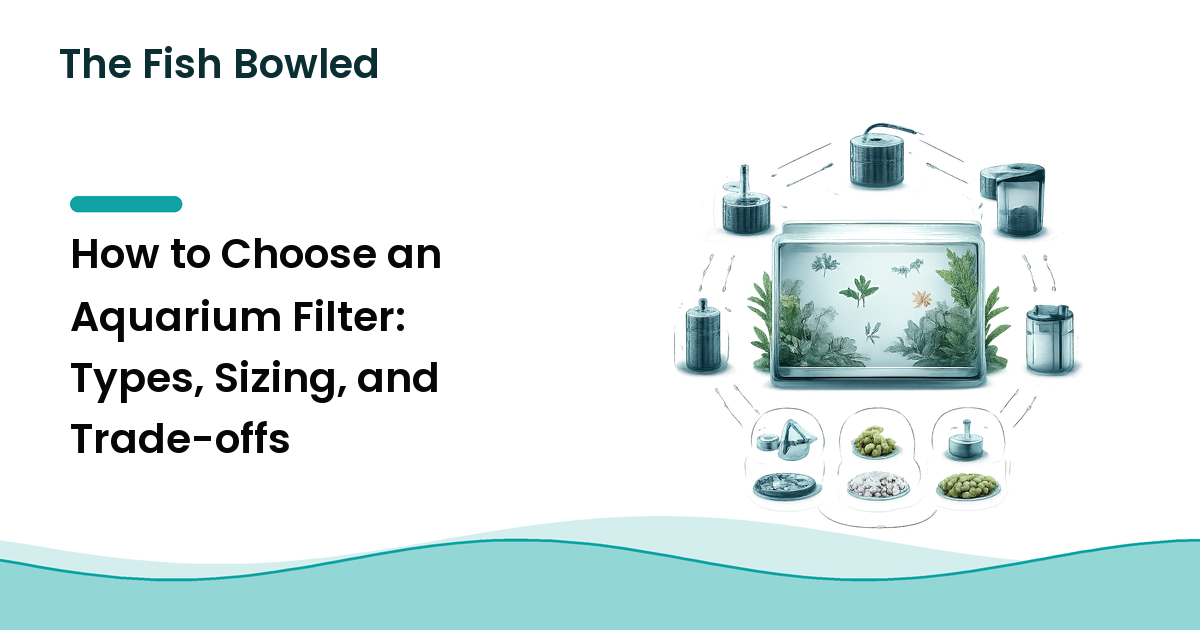
- Filter. This is non-negotiable — it houses the bacteria that clean the water. A hang-on-back or sponge filter is simple and reliable for beginners; canister filters offer more capacity for larger tanks. Match the filter's rating to your tank size or slightly above.
- Heater. Most popular aquarium fish are tropical and need stable warmth, typically around 75–80°F (24–27°C). A thermostat-controlled heater plus a thermometer keeps it steady.
- Light. A basic LED is fine for fish-only tanks; live plants need a light rated for plant growth.
- Substrate and decor. Gravel or sand, plus a few plants, rocks, or caves so fish feel secure.
Choose equipment by reliability and correct sizing rather than the lowest price — an underpowered filter or heater causes the very instability you are trying to avoid.
Step 3: Fill and dechlorinate
Rinse substrate and decor in plain water (no soap), arrange them, then fill the tank. Tap water almost always contains chlorine or chloramine, which is harmful to fish and kills the beneficial bacteria you are about to grow.
- Add a water conditioner (dechlorinator) as you fill, following the dose on the bottle.
- Install and run the filter and heater so the system circulates and warms up.
- Let everything run for a day to confirm the temperature is stable and nothing leaks.
Step 4: Cycle the tank before adding fish
This is the step beginners skip and later regret. Cycling grows the bacteria that convert toxic ammonia into nitrite and then into far less harmful nitrate. The most fish-friendly approach is a fishless cycle:
- Add a small ammonia source — a pinch of fish food or bottled ammonia — to feed the bacteria.
- Test the water every few days for ammonia, nitrite, and nitrate with a liquid test kit.
- Watch ammonia rise, then nitrite rise as ammonia falls, then both drop to zero while nitrate appears.
When ammonia and nitrite both read zero within a day of dosing, the tank is cycled. This usually takes two to six weeks. A bottled bacteria starter can speed it up, but always confirm with test results rather than the calendar. For the full routine on keeping those numbers stable afterward, see the water-quality-guide.
Step 5: Add fish slowly
Once cycled, add a small number of hardy fish first, then wait a week or two before adding more so the bacteria can scale up to the new load. Choose peaceful, beginner-friendly species suited to your tank size, and check that any tankmates are compatible before buying. Our fish-stocking-guide covers how to do that without overcrowding.
A simple setup checklist
- Tank — 20 gallons or more, on a level, sturdy stand.
- Equipment — correctly sized filter, heater, thermometer, light.
- Fill — rinse, arrange, fill, and dechlorinate.
- Cycle — fishless cycle, tested to zero ammonia and nitrite.
- Stock slowly — a few hardy fish, then wait before adding more.
FAQ
How long does it take to set up an aquarium?
Assembling and filling takes an afternoon, but cycling the water takes two to six weeks. Plan for the wait — it is the part that keeps your fish alive.
Can I add fish the same day I set up the tank?
It is best not to. A new tank has no beneficial bacteria, so ammonia builds up quickly and harms fish. Cycle first, then add fish gradually.
What size aquarium is best for a beginner?
A 20-gallon tank or larger. More water stays more stable, which makes small mistakes much less dangerous than they are in a tiny bowl or nano tank.
Do I really need a heater and filter?
For almost all popular aquarium fish, yes. The filter grows the bacteria that clean the water, and a heater keeps tropical fish at a stable temperature. Both prevent the swings that stress and sicken fish.
What is cycling and why does it matter?
Cycling grows bacteria that turn toxic ammonia into far safer nitrate. Without it, fish waste poisons the water — which is why cycling before adding fish is the most important setup step.
Next step
Take it slow: set up your tank, run a patient fishless cycle, test until ammonia and nitrite read zero, and only then welcome your first few hardy fish. A calm start is the foundation of a healthy, easy-to-keep aquarium.